I’ve been working as a driveway installer for over twelve years, and gravel driveway are one of the most versatile surfaces I deal with regularly. They’re deceptively simple in appearance, but getting a gravel driveway right requires experience and careful planning. I’ve installed dozens across residential properties, and the projects that turn out best are always the ones where the base and drainage were treated as seriously as the top layer.
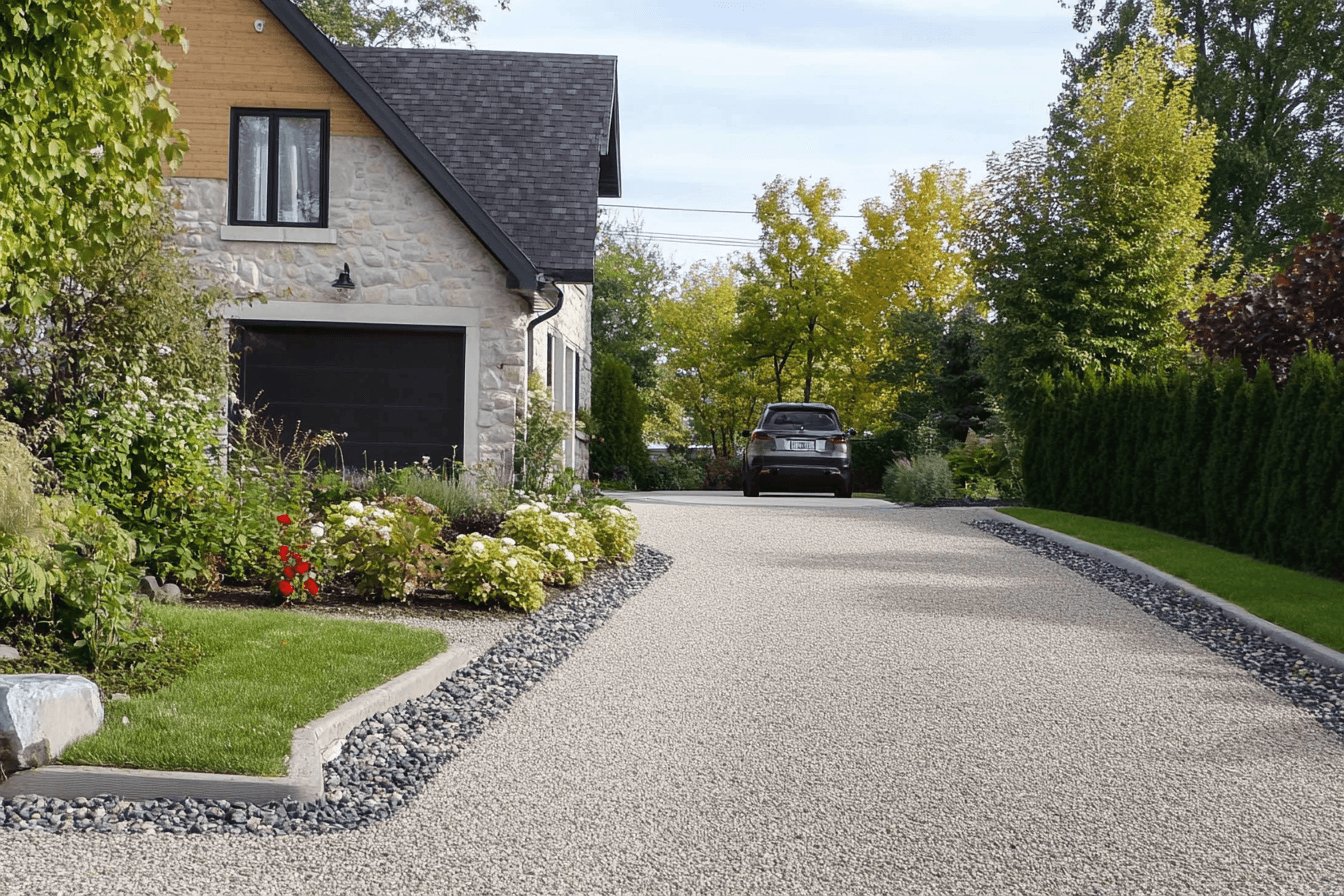
One example that comes to mind is a property I worked on last spring. The homeowner wanted a gravel driveway to match their country-style home, and at first, they thought all that was needed was a few truckloads of stone spread evenly. When I first assessed the site, I noticed the soil was soft and had a slight slope toward the garage. Without addressing that, water would have pooled and washed the gravel away within months. We excavated the area, installed a compacted base of crushed stone, and added a gentle crown in the center to allow water to run off naturally. A few months later, the homeowner told me the driveway looked perfect even after a heavy downpour—something they hadn’t expected when they first imagined a simple gravel path.
One mistake I see frequently is underestimating the thickness and type of gravel needed. A customer last summer opted for decorative gravel because it looked attractive in photos, but it was too fine for the driveway’s heavy use. Cars were leaving ruts, and the stones were spreading into the lawn. I recommended adding a coarser layer beneath the decorative gravel, which solved the problem entirely and kept the appearance elegant. People often assume all gravel behaves the same, but there’s a big difference between fines, crushed stone, and angular gravel. Choosing the wrong type can turn a beautiful driveway into a maintenance headache quickly.
Edges and containment are another area homeowners overlook. Without proper borders, gravel tends to wander, creating uneven surfaces and messy lines. On a property near Reading, I installed a gravel driveway with timber edging, which kept the stones in place and made maintenance much simpler. The homeowner appreciated that it created a neat boundary and prevented gravel from spilling into the flower beds. In my experience, spending a little extra on containment pays off over the life of the driveway.
Maintenance is another consideration. Gravel driveways aren’t set-it-and-forget-it surfaces. I’ve seen driveways that were installed five years ago without any upkeep, where the stone had thinned in the middle, creating dips and pooling water. I often advise homeowners to periodically rake the surface, top it up with fresh gravel as needed, and ensure drainage channels remain clear. One client learned this after a particularly wet winter; a simple top-up of gravel and regrading restored the driveway in a single afternoon.
Despite these challenges, gravel driveways offer unique advantages. They’re relatively affordable compared to concrete or block paving, easy to repair, and can create a charming aesthetic that suits both traditional and modern homes. I’ve also found they’re forgiving on tricky terrains where other surfaces might crack or sink. For homes with gentle slopes or uneven soil, gravel often becomes the practical and beautiful choice.
From my perspective, installing a gravel driveway successfully is less about the stone itself and more about preparation and attention to detail. Proper base construction, correct gravel type, adequate drainage, and edging are all critical. Done right, a gravel driveway can last decades, resist wear, and look attractive with minimal effort. Done poorly, it can quickly become a source of frustration and constant upkeep. For homeowners considering gravel, I always recommend investing in the groundwork—it’s the difference between a driveway that functions beautifully and one that constantly needs fixing.
Over the years, I’ve grown to appreciate the subtlety of gravel. It’s not flashy, but when installed properly, it’s practical, durable, and surprisingly elegant. A well-built gravel driveway can complement any property while standing up to the demands of daily use, which is why I continue to recommend it to clients who want something both functional and visually appealing.